
Views: 0 Author: Site Editor Publish Time: 2026-10-24 Origin: Site
Every day, hands reach for the same few fixtures without a second thought. A doorknob here, a kitchen cabinet pull there — small pieces of hardware that quietly shape how a space feels. Yet the moment one of these components turns loose, sticks, or simply looks dated next to a fresh coat of paint, its absence becomes impossible to ignore.
Choosing the right Door Handle is rarely glamorous work, but it carries more weight than most homeowners, designers, and contractors expect. Material, finish, and mechanism all influence durability, comfort, and the overall tone of a room. This article breaks down what separates a forgettable handle from a lasting one, and it explains why sourcing from an experienced manufacturer makes a measurable difference in quality.
A front door gets opened and closed dozens of times a day. Cabinet hardware in a busy kitchen might see even more use. Over months and years, that repeated friction tests the limits of cheap metal, loose screws, and poorly finished surfaces. Hardware that looks fine in a showroom can start wobbling within a year if the underlying construction cuts corners.
Stainless steel has become the preferred material for architects and property developers who want fixtures that hold up under constant use. It resists corrosion, handles humidity without pitting, and keeps its finish far longer than zinc alloy or plastic-coated alternatives. For commercial buildings, hotels, and high-traffic residential complexes, this durability translates directly into lower maintenance costs over time.
SHI SHANG HARDWARE CO., LTD. has built its reputation around exactly this standard. Founded in Jiangmen, China in 1989 as a foreign-invested enterprise originating from Stuttgart, Germany, the company has spent decades refining stainless steel hardware production. That history has positioned it as one of the largest stainless steel production bases in China, supplying door hardware, locks, and faucets to commercial offices, residential apartments, hotels, and resorts worldwide.
Not every door calls for the same hardware. Function, traffic level, and design intent all play a role in determining the right fit. The table below outlines how the main categories differ.
Hardware Type | Best Suited For | Typical Mechanism | Common Finish Options |
|---|---|---|---|
Lever-style handles | Interior doors, accessibility-focused spaces | Push-down lever action | Brushed steel, polished chrome, matte black |
Pull-style handles | Entry doors, glass doors, cabinetry | Fixed grip, no rotation | Stainless steel, satin nickel |
Knob-style handles | Traditional interiors, bedrooms | Twist-and-turn action | Brass, bronze, stainless steel |
Locking systems | Exterior doors, security-sensitive areas | Keyed or electronic locking | Stainless steel, weatherproof coatings |
This comparison highlights a simple truth: hardware selection should follow function first, then aesthetics. A lever mechanism that works beautifully on an interior bedroom door isn't necessarily the right call for a heavy commercial entrance.
For entry doors, glass partitions, and kitchen cabinetry, a well-made Door Pull Handle does more than open a door — it sets a tone the moment someone touches it. A pull handle with a solid, weighted feel communicates quality before a visitor even steps inside. Thin, lightweight hardware, by contrast, can undercut an otherwise well-designed entrance.
Material thickness and mounting hardware matter just as much as the visible finish. Pull handles that attach with reinforced backplates distribute pressure more evenly, which reduces the wobble that develops over years of daily use. This is particularly relevant for commercial properties, where hundreds of people might pass through a single entrance each day.


Lever mechanisms solve a practical problem that knobs often create: they're easier to operate with limited hand strength, an elbow, or even a foot when hands are full. This makes them a popular choice in accessible design, healthcare facilities, and family homes with young children or elderly residents.
Quality varies significantly within this category. A well-engineered lever mechanism uses a tight internal spring system that returns smoothly to position after each use, without excessive looseness or resistance. Cheaper versions tend to loosen within months, developing a wobble that eventually leads to a full replacement.
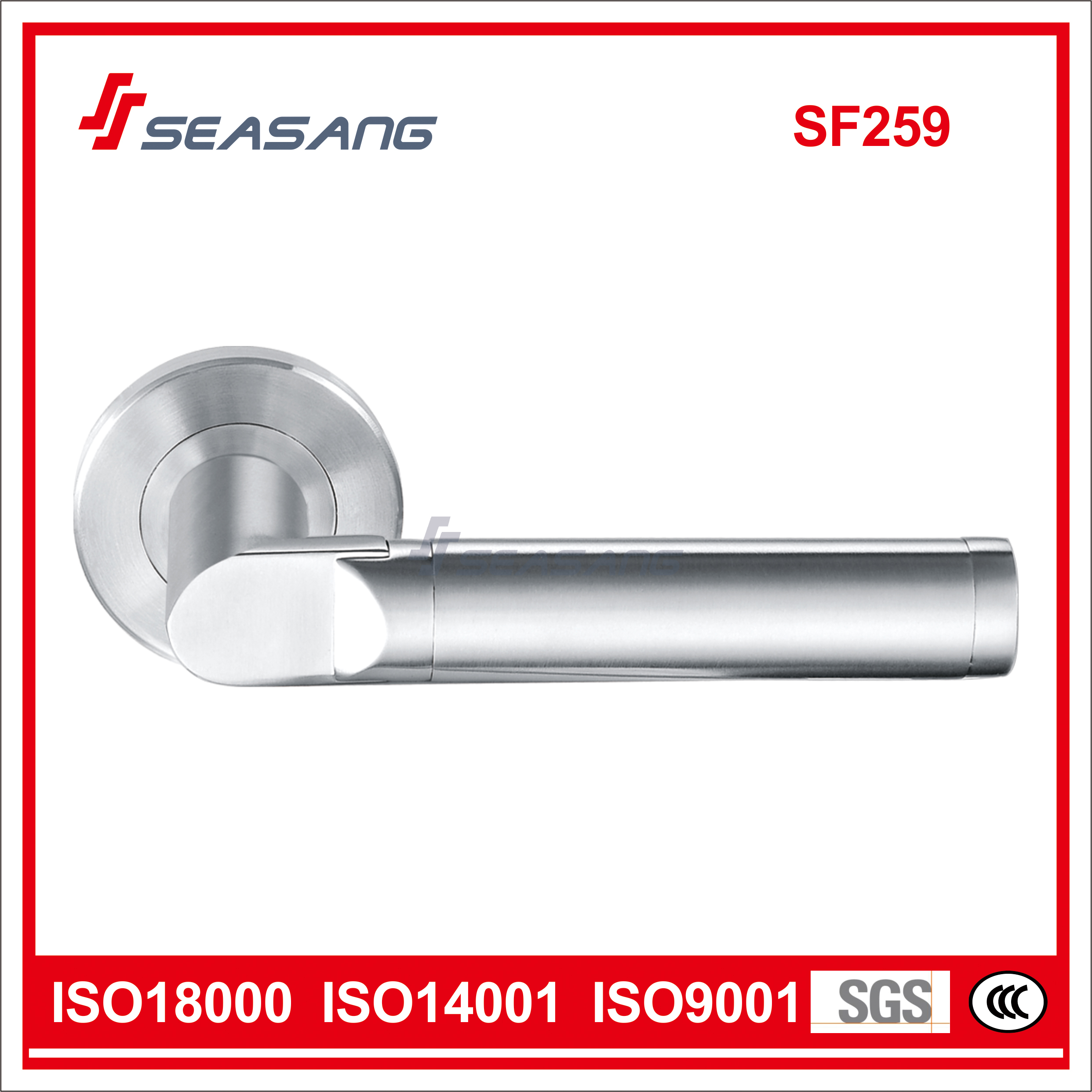

For buyers comparing options, lever door handles with reinforced internal components and corrosion-resistant coatings tend to offer the best long-term value, particularly in humid climates or coastal regions where moisture accelerates wear on lower-grade metals.
Large-scale projects — apartment complexes, office buildings, hotel renovations — face a different set of considerations than a single residential remodel. Bulk sourcing requires consistency across units, reliable lead times, and a manufacturer capable of maintaining quality control across large production runs.
This is where established manufacturers with decades of production experience offer a clear advantage. A supplier with a long operating history, documented qualifications, and a track record across commercial, residential, and hospitality projects reduces the risk of inconsistent batches or unexpected delays mid-project. SHI SHANG HARDWARE's project portfolio spans commercial offices, residential apartments, and hotels and resorts, reflecting the kind of scale and consistency that larger developments require.
Beyond function, finish plays a defining role in how hardware integrates with a room's overall design. Brushed stainless steel suits modern and industrial interiors well, offering a clean look that resists fingerprints better than polished chrome. Matte black has grown popular in contemporary residential design, pairing well with darker trim and minimalist aesthetics. Satin nickel sits comfortably between traditional and modern styles, making it a flexible choice for renovations that blend old and new elements.
Whatever finish gets chosen, consistency across a space matters. Mixing finishes across adjacent doors or cabinetry can create visual discord, even when each individual piece is well made. Property managers overseeing multi-unit buildings especially benefit from standardizing hardware finishes to maintain a cohesive look across different units.
Hardware decisions often get treated as an afterthought in construction and renovation projects, squeezed in near the end after flooring, paint, and fixtures have already been chosen. Treating hardware selection as a secondary decision, however, tends to cost more in the long run through premature replacements and inconsistent quality across a property.
A more effective approach starts with identifying traffic patterns and functional needs first, then narrowing material and finish options based on those requirements. Working with a manufacturer that has sustained decades of production experience, like SHI SHANG HARDWARE, also reduces the guesswork involved in sourcing hardware that will perform reliably over years of daily use rather than months.
Small fixtures carry an outsized influence on how a space feels and functions. Investing the time to choose well-made hardware pays off every single time a door opens.


